Loading…
The export process, step by step
Importing a Toyota C-HR from China takes five stages: quotation, proforma invoice, inspection, loading and document delivery. Here is what happens at each one, what you receive, and what you need to prepare on your side.
1. Inquiry and quotation
Tell us the model year, powertrain, trim, colour, quantity and destination port. Sales checks current stock and replies within 24 hours with an itemised quotation in FOB or CIF terms. For used vehicles the quotation lists mileage and first-registration date for each unit.
2. Proforma invoice (PI) and payment
Once you accept the quote we issue a proforma invoice with the vehicle list, VIN allocation, delivery timeline and banking terms. Payment terms such as T/T or L/C are agreed on the PI before any money moves. The PI is also the document your bank and your import licence application usually need.
3. Vehicle preparation and inspection
We prepare the vehicles and send photos or video at each milestone, so you can see the actual units. If you want an independent check, we arrange third-party inspection — for example SGS or Bureau Veritas — before loading, at your cost.
4. Export customs and loading
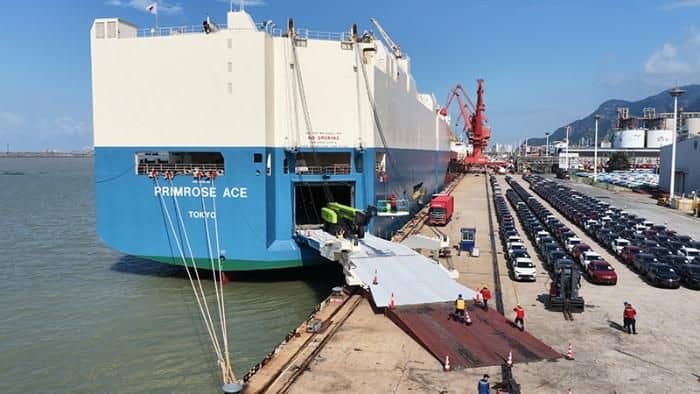
We complete export registration and the customs declaration in China, then load by Ro-Ro vessel or in containers. Container loading uses racking and lashing; a 40ft high-cube container usually takes three to four C-HRs depending on the racking plan.
5. Documents and delivery
Original documents are sent for your customs clearance: commercial invoice, packing list, bill of lading and certificate of origin. Where your market requires additional certificates, tell us at the quotation stage so we can confirm what is possible.


FOB or CIF: which should you choose?
FOB and CIF are Incoterms® rules published by the International Chamber of Commerce. They define who pays for and arranges each part of the journey.
| FOB (Free On Board) | CIF (Cost, Insurance & Freight) | |
|---|---|---|
| Who books the ship | You or your forwarder | EVtoU |
| Ocean freight | Paid by you | Included in our price |
| Marine insurance | Arranged by you | Included in our price |
| Risk transfers | When goods are on board in China | When goods are on board in China |
| Best for | Buyers with their own forwarder | First-time importers who want one price |
Under both terms, risk passes to the buyer once the vehicles are on board at the port of loading; CIF only changes who pays for freight and insurance.
Ro-Ro or container shipping?
- Ro-Ro (roll-on/roll-off): vehicles are driven onto a car carrier. Suits larger batches and ports with regular car-carrier calls.
- 40HQ container: vehicles are racked and lashed inside a container. Suits small orders, mixed models and inland destinations reached by rail or truck.
- Shipping fee and delivery date are negotiated per order. Chat with sales for current options to your port.
Which documents will I receive?
- Commercial invoice
- Packing list
- Bill of lading (B/L)
- Certificate of origin (CO)
- Export customs declaration copy
- Other certificates where your market requires them — confirm at quotation stage
What should I prepare on my side?
- An import licence or registration, if your country requires one for vehicles
- A customs broker or clearing agent at the destination port
- Confirmation of your country's rules on vehicle age, emissions and conformity
- Your bank's requirements if paying by letter of credit